Why Walkable Downtowns Are Becoming Niagara’s Secret Economic Advantage
For decades, economic development conversations often focused on industrial parks, highways, office buildings, and large-scale investment projects.
Those things still matter.
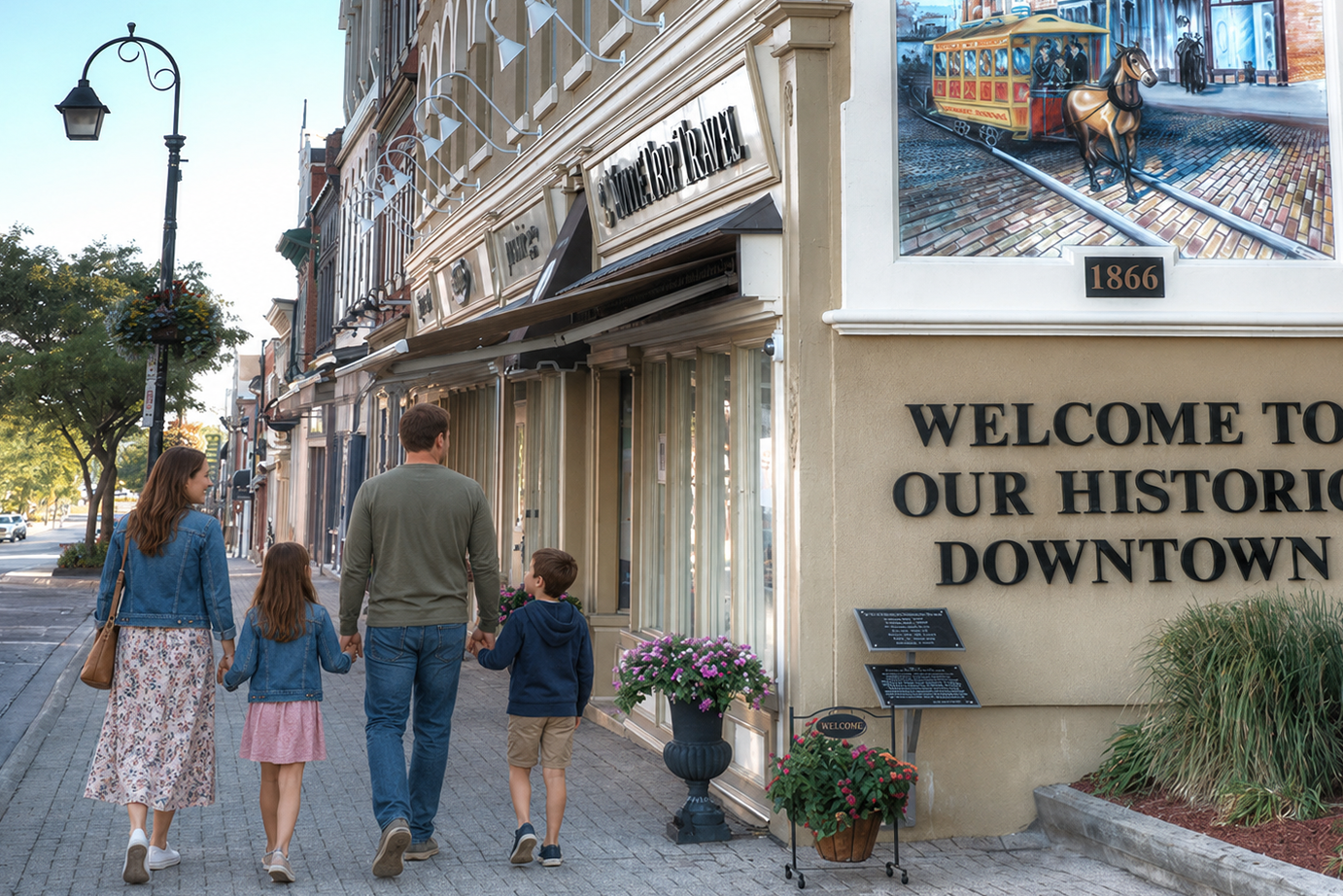
But across Niagara, another growth story is quietly unfolding—one that starts with sidewalks, storefronts, patios, local businesses, and the simple ability to walk from one destination to another.
Walkable commercial districts are becoming some of Niagara's most valuable economic assets.
Whether it's Downtown St. Catharines, Downtown Niagara Falls, Port Colborne's West Street, Pelham's Fonthill core, Grimsby's downtown, or Niagara-on-the-Lake's historic shopping district, these areas are doing more than creating attractive places to visit. They are helping shape how people spend money, connect with businesses, and choose where they want to live.
In many ways, walkability is becoming a competitive advantage.
People are buying experiences, not just products
Consumer habits have changed.
People can order almost anything online. They can have groceries delivered, purchase clothing from their phones, and stream entertainment without leaving home.
That means physical commercial districts have a new challenge: they need to offer something people cannot get online.
Experience.
A walkable downtown creates opportunities for spontaneous spending and discovery. Someone may arrive for coffee, then visit a bookstore, browse a boutique, stop for lunch, purchase local products, and finish the afternoon at a winery or brewery.
That kind of activity benefits multiple businesses at once.
The International Downtown Association Canada has long argued that vibrant, walkable downtowns create stronger local economies because they encourage visitors to spend more time—and more money—in a community.
The appeal goes beyond convenience
Urbanist and author Jeff Speck, one of North America's leading advocates for walkable communities, famously wrote:
"Walkability is both the most efficient and the most enjoyable way to get around."
While Speck was speaking broadly about city design, the idea resonates in Niagara.
People are increasingly looking for communities where they can park once—or not at all—and enjoy a district on foot.
That desire influences where people shop, dine, invest, and even purchase homes.
Why walkability matters to local businesses
Walkable commercial districts create something that large shopping centres often struggle to replicate: connection.
Independent businesses benefit from being close to one another. A restaurant helps nearby retailers. A brewery supports surrounding shops. A festival helps local cafés. Visitors who arrive for one experience often discover three others.
That creates what economists call a multiplier effect.
Instead of spending remaining isolated inside one building, consumer spending circulates through multiple local businesses.
Across Niagara, this pattern is visible in communities of all sizes.
Downtown St. Catharines has seen growing investment in restaurants, culture, events, and residential development.
Niagara-on-the-Lake continues to attract visitors through a blend of heritage, shopping, hospitality, and wine-country experiences.
Port Colborne has leveraged its waterfront setting and historic downtown to create a distinctive local atmosphere.
Fonthill in Pelham has embraced a community-focused downtown that encourages residents to gather, shop, and participate in local events.
These places may look different, but they share something important: they invite people to stay awhile.
Walkability is becoming a real estate story
What makes this trend particularly interesting is how closely it connects to housing.
Today's buyers are increasingly interested in lifestyle.
They are not simply asking about square footage or lot size. They are asking whether they can walk to a coffee shop. Whether there is a farmers market nearby. Whether there are restaurants, trails, public spaces, and local businesses within easy reach.
That shift is changing how communities compete.
Walkable districts help create the sense of place that attracts residents, visitors, entrepreneurs, and investors.
As Niagara continues to grow, communities that successfully combine housing, local business, public spaces, and pedestrian-friendly design may find themselves increasingly attractive to future residents.
Economic development starts at street level
When people hear the phrase economic development, they often imagine major announcements involving factories, hospitals, or infrastructure projects.
Those investments remain important.
But strong economies are also built one storefront at a time.
A busy downtown café creates jobs. A boutique attracts shoppers. A local restaurant supports suppliers. A festival fills hotel rooms. A brewery creates reasons to visit. Together, those activities help create economic momentum that spreads throughout a community.
The most successful commercial districts do not rely on one large attraction.
They rely on dozens of businesses creating a destination together.
The future may be more local than we think
Niagara's growth story is often told through tourism, housing, agriculture, manufacturing, and infrastructure.
Those sectors deserve attention.
But there is another story worth watching.
Across the region's twelve municipalities, walkable downtowns and commercial districts are becoming places where business, community, culture, and lifestyle intersect.
They support entrepreneurs. They attract visitors. They strengthen local identity. They create opportunities for small businesses. They help people feel connected to where they live.
And in an era where many purchases can happen with a single click, that human connection may be one of the most valuable economic assets a community can have.
The future of economic development might not start with a highway interchange or industrial site.
It might start with a sidewalk.
Sources:
- International Downtown Association: https://downtown.org/idacanada/
- Jeff Speck (Walkable City): https://en.wikipedia.org/wiki/Jeff_Speck
- Strong Towns: https://www.strongtowns.org
- Ontario Business Improvement Area Association: https://obiaa.com