Affordable Housing in Niagara: Why It’s About More Than Home Prices
Affordable housing is one of the biggest conversations shaping Niagara’s future.
For families, first-time buyers, renters, seniors, workers, students, and people trying to rebuild stability, housing affordability is not just a real estate issue. It is a quality-of-life issue. It affects where people can live, where businesses can find workers, how families plan their futures, and whether communities can grow without leaving people behind.
In 2026, Niagara’s housing story is complicated.
Home prices have softened from recent highs, new housing supply is moving forward in parts of the region, and governments are investing in rental and affordable housing programs. But affordability remains a serious challenge, especially for lower-income households, renters, single-income families, and people waiting for subsidized or supportive housing.
In other words, Niagara may be more affordable than Toronto or Vancouver, but that does not mean housing is automatically affordable for everyone.
The market has cooled, but affordability is still tight
According to the Niagara Association of REALTORS® / CREA, Niagara’s MLS® Home Price Index composite benchmark price was $575,300 in May 2026, down 8% from May 2025. The benchmark price for single-family homes was $600,500, while townhouse/row units were $525,200 and apartments were $343,200.
On paper, those numbers show improved affordability compared to the overheated market years.
But for many households, the challenge has shifted from price alone to carrying costs. Mortgage rates, insurance, utilities, property taxes, maintenance, rent, groceries, childcare, and transportation all affect whether a home is truly affordable.
That is why affordability cannot be measured only by whether prices are rising or falling.
A home can be cheaper than last year and still be out of reach.
Market source:
Niagara Association of REALTORS® / CREA Statistics
Affordable housing means different things to different people
Part of the challenge is that “affordable housing” is often used as one phrase, but it can mean several different things.
For a first-time buyer, affordable housing may mean finding a condo, townhouse, or modest detached home within a realistic budget.
For a renter, it may mean a purpose-built rental unit with rent that does not consume most of their income.
For a senior, it may mean accessible housing close to transit, healthcare, and community supports.
For someone experiencing homelessness, it may mean supportive or transitional housing that provides stability and services.
Niagara needs all of these options.
That is why the affordable housing conversation has to include more than resale listings. It has to include rental supply, non-profit housing, supportive housing, missing-middle housing, accessory dwelling units, and purpose-built rental development.
New supply is part of the answer
One of the most encouraging signs in Niagara is the push to add more housing supply.
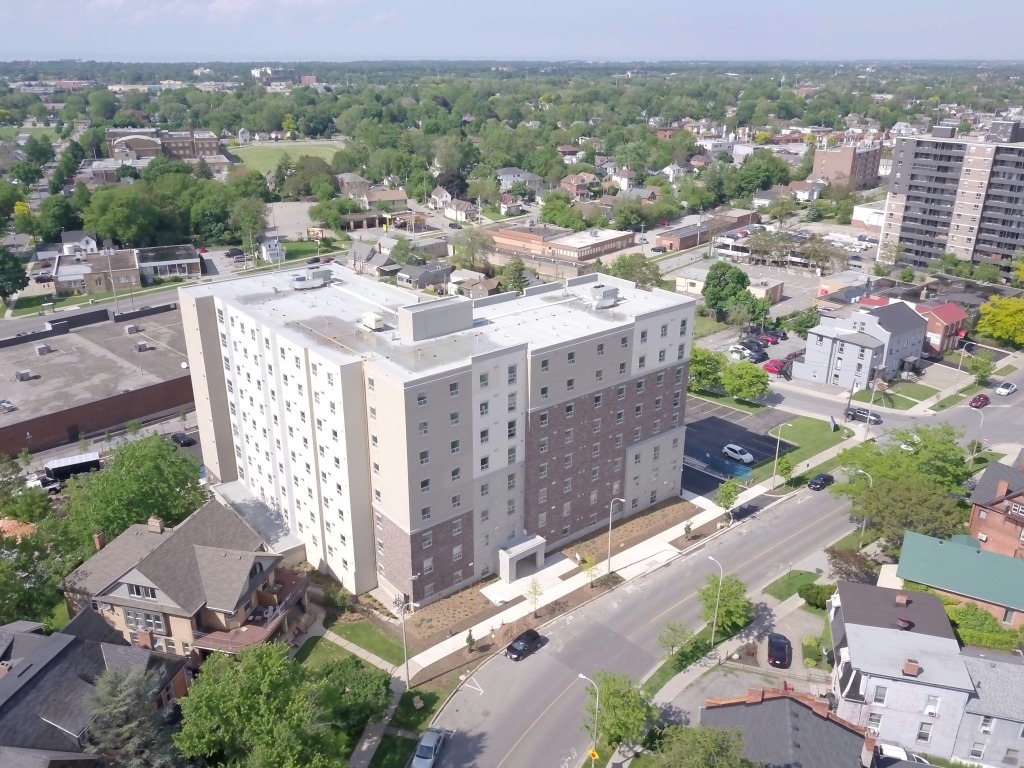
In St. Catharines, the City reported that it issued building permits for 1,025 new dwelling units during year two of its Housing Accelerator Fund Action Plan. The City said about 900 purpose-built rental units and 43 affordable housing units were supported through Housing Accelerator Fund incentives. Permits for nearly 500 additional units were also expected to move forward in 2026.
Mayor Mat Siscoe described the progress this way:
“The City’s Housing Accelerator Fund program is working and driving measurable increases in housing supply.”
That matters because affordability improves when communities offer more housing options. Not everyone needs or wants a detached home. Many residents need rentals, apartments, townhomes, secondary suites, smaller homes, and supportive housing.
St. Catharines update:
Housing Accelerator Fund powers building surge in St. Catharines
Rental housing is a major part of the affordability puzzle
Niagara Region’s 2026 Purpose-built Rental Housing Incentive is another important piece of the story.
The program is designed to encourage market, attainable, and affordable purpose-built rental housing across Niagara. Approved projects must keep units as rentals and maintain the approved affordability level for at least 25 years.
The program includes incentives such as a tax increment grant, a per-door grant for affordable rental units, and competitive capital funding for deeply affordable rentals.
That kind of policy matters because Niagara needs long-term rental supply, not just short-term responses.
A healthy housing market needs homes people can buy and homes people can rent.
Program information:
Niagara Region Purpose-built Rental Housing Incentive
Supportive housing is also housing
Affordable housing is not only about helping people buy into the market.
It is also about creating stability for people who need support.
In February 2026, the federal government announced more than $9.8 million in funding to help create 39 secure rental homes in Niagara Falls through the conversion of an existing motel. The project is intended for women and gender-diverse individuals who need transitional housing.
Elisabeth Zimmermann, Executive Director of YWCA Niagara Region, put it simply:
“Safe, stable homes are the foundation for everything else.”
That sentence captures the heart of the issue.
Housing is not just shelter. It supports health, work, education, independence, and dignity.
Project information:
Canada announces 39 homes in Niagara Falls
The waiting list shows the depth of need
For people applying for subsidized housing, the wait can be long.
Niagara Region’s housing information shows estimated wait times that vary by municipality and unit type. For example, current listings show one-bedroom wait times of several years in many communities, including approximately five years in Niagara Falls, seven years in St. Catharines, eight years in Lincoln, nine years in Port Colborne, 12 years in Welland and Thorold, and 18 years in Niagara-on-the-Lake.
Those numbers show why affordable housing cannot be solved by one project or one program.
It requires a full housing continuum.
Housing wait time information:
Find a Housing Unit — Niagara Region
Affordability is connected to lifestyle
For Beyond The Market readers, the affordable housing conversation also connects directly to lifestyle.
People are choosing Niagara for more space, trails, beaches, small-town character, local food, neighbourhood feel, and a lifestyle that can feel more grounded than the GTA.
But for that lifestyle to remain accessible, Niagara needs housing options across income levels.
St. Catharines needs rentals and urban infill.
Niagara Falls needs housing that supports both residents and workers.
Welland needs options for families, renters, and future growth.
Fort Erie and Port Colborne need housing that supports waterfront and community living without pricing out local residents.
Grimsby, Lincoln, and Niagara-on-the-Lake face the challenge of balancing lifestyle appeal with attainable options.
A strong region cannot only be attractive to people who can already afford it.
It has to work for the people who keep it running.
The bigger picture
CMHC’s 2026 Housing Market Outlook notes that St. Catharines–Niagara is expected to see improved affordability support sales in 2026, while buyers remain cautious and rental apartment activity continues to play an important role in supply.
That is the direction Niagara needs to keep moving: more choice, more rental supply, more affordability, more supportive housing, and more communities where people at different stages of life can find a place to belong.
Affordable housing is not only about building units.
It is about building stability.
And if Niagara wants to grow well, not just grow fast, housing affordability has to remain at the centre of the conversation.